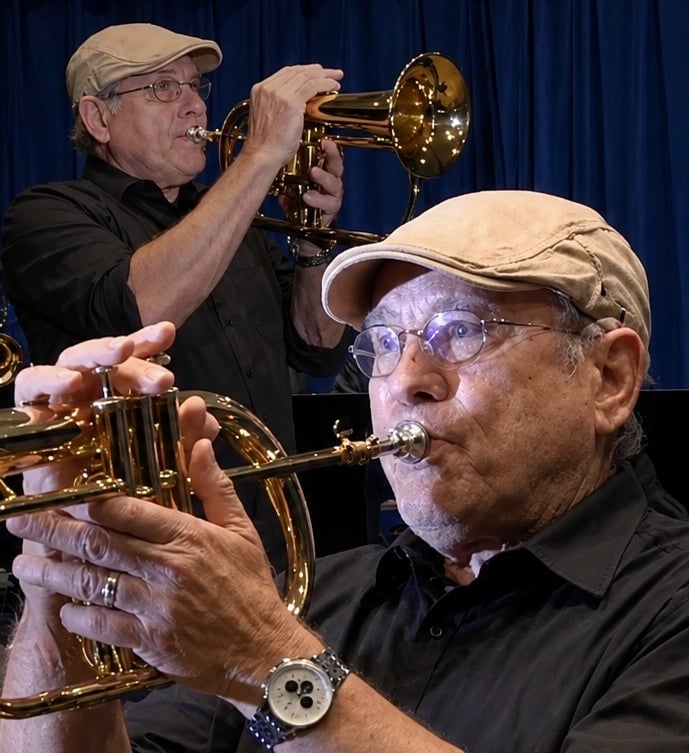
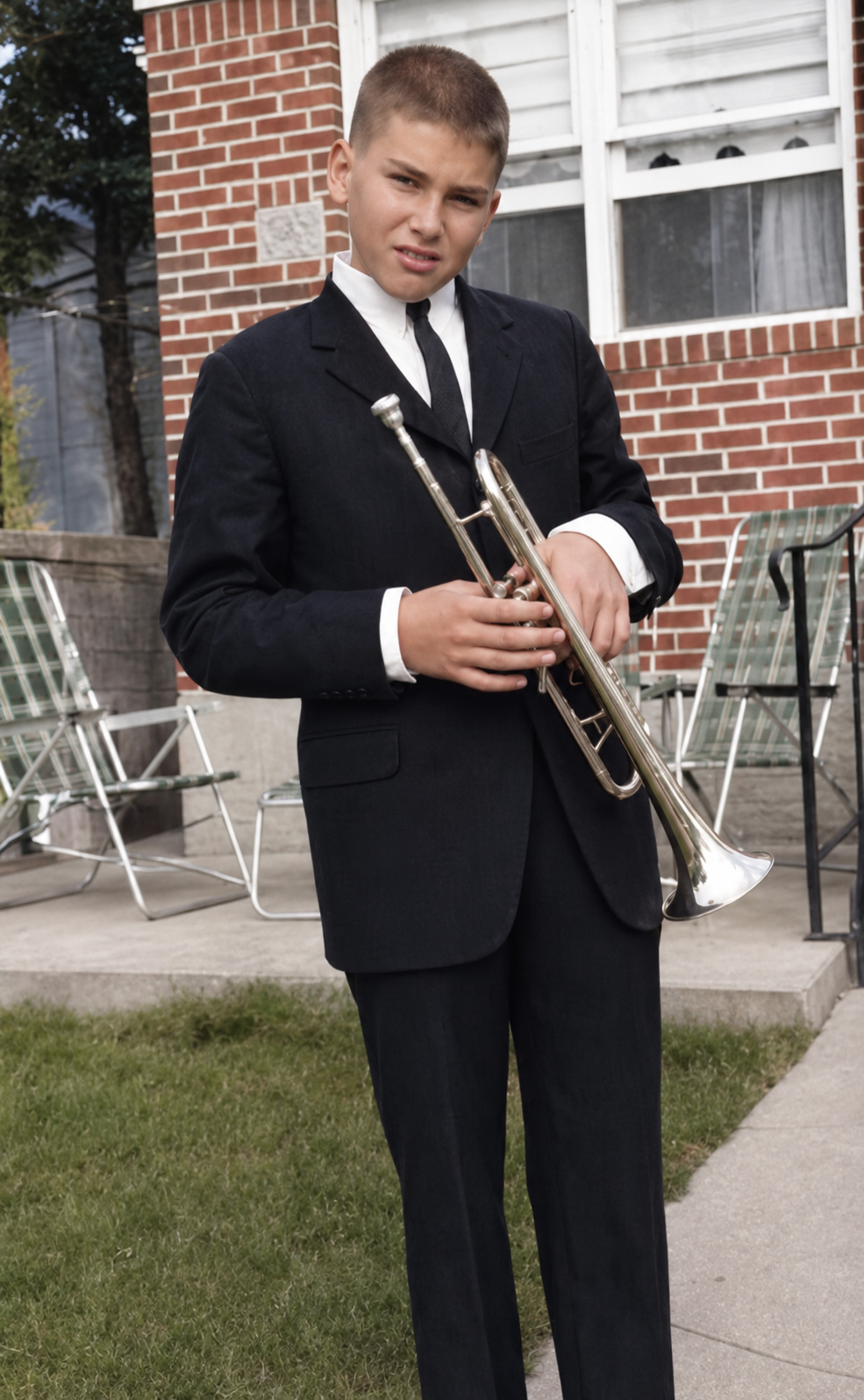
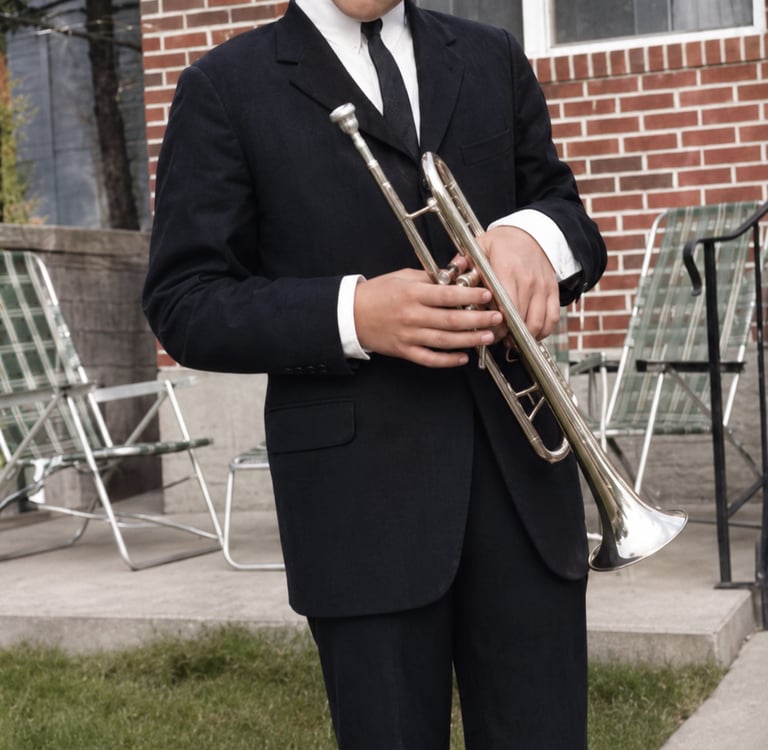
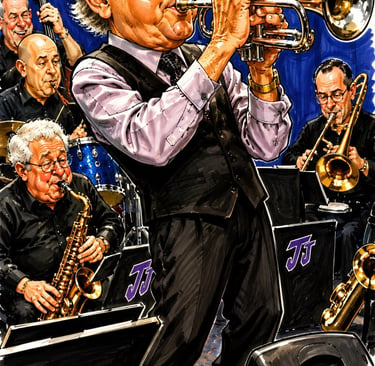
AAt just eight years old,(1956),in New York City, Richie fell in love with the trumpet. Under the guidance of master teacher Charles Colin, his raw talent bloomed so quickly that by age 12, he was already playing professional gigs, and a member of Musicians Union, Local 802.
In 1963, his musical journey took him to Los Angeles. There, he refined his craft under legendary mentors Irving Bush, John Clyman, and Tommy Stevens. College life became a whirlwind of recording sessions. Richie found himself in the studio tracking hits for iconic acts like Della Reese, Ike & Tina Turner, and The Impressions.
But life soon called him down a different path. After completing his bachelor’s degree and graduate school, Richie traded his trumpet for a badge. He entered a 35-year career in law enforcement, locking his horn away and leaving the music behind entirely to serve his community.
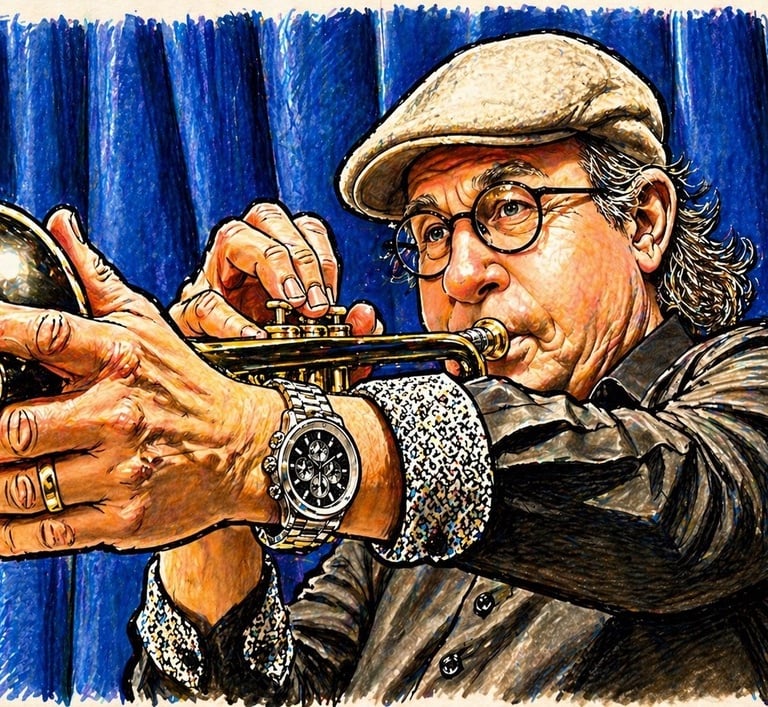
Retirement, however, brought a second act. Dusting off his old trumpet, Richie began the long, grueling road back to peak performance. He didn't just reclaim his past skill—he took it over.
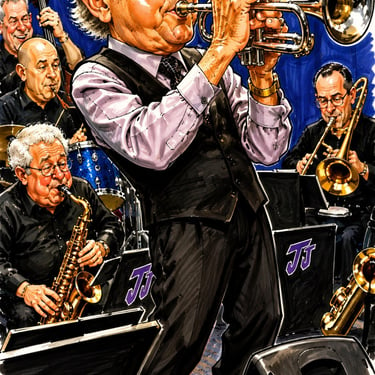
Today, Richie is busier than ever. Now, living with his wife of 40 years, Laura, he is involved in the various music programs available on the campus of Leisure Worlds Seal Beach. He leads his own jazz ensemble and also serves as the West Coast Musical Director for Pat Longo’s Hollywood Big Band.
He has shared stages with Nancy Sinatra and Connie Stevens. Richie was the Principal Trumpet for the Los Angeles Police Department Concert Band, and also directed the LAPD's jazz and swing ensembles. Additionally, he produced, and was featured artist on the acclaimed albums for the Woody James Big Band. Richie can also be heard playing first trumpet with the UCLA Alumni Band. Decades after walking away, Richie proved that a true passion never truly leaves you.